

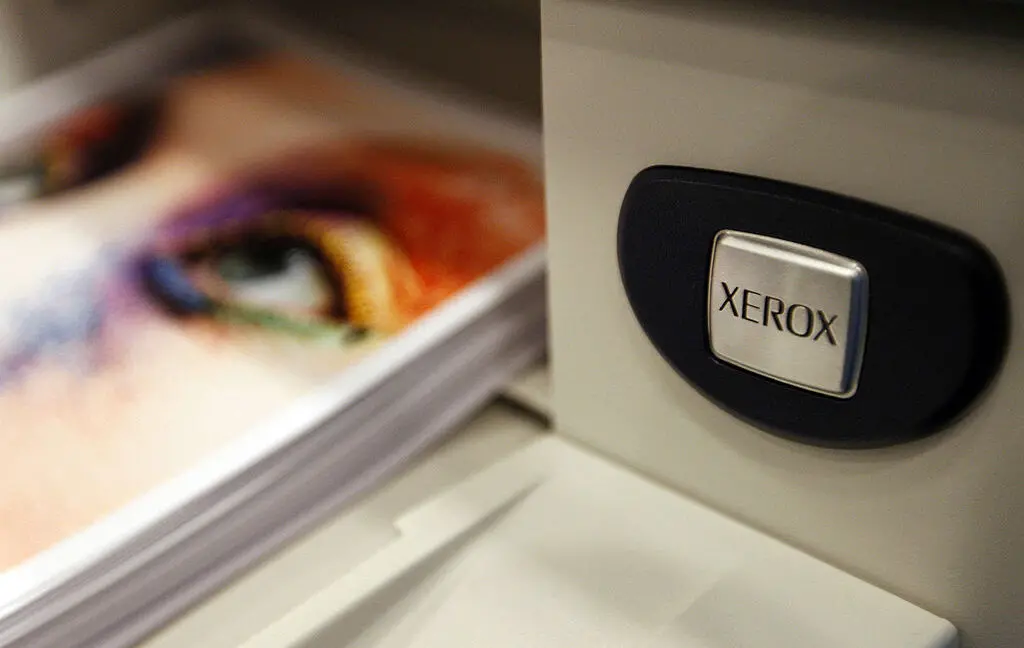
A plot to smuggle nearly 50 pounds of cocaine into Australia using seemingly ordinary office printers has ended with prison sentences for three men, Australian authorities announced this month. The scheme, which involved five Xerox printers with drugs hidden in their paper trays, was foiled by the Australian Border Force (ABF) in April 2017 and has now reached its final legal resolution.
The Plot
In early 2017, an international drug syndicate attempted to bring 22.4 kilograms (49.4 pounds) of cocaine into Australia by concealing the drugs within the paper trays of five Xerox brand printers. The drugs, with an estimated street value of between 9.3 million and 12.4 million Australian dollars (approximately $6.7 million to $9 million), were shipped from overseas to a factory in Airport West, Victoria. The conspirators likely believed that the printers would attract little suspicion, as office equipment is routinely imported into the country.
The Interception
On April 30, 2017, ABF officers in Melbourne intercepted the package containing the printers. Upon inspection, they discovered ten packages of compressed white powder concealed within the printers' paper trays. Presumptive testing confirmed that the powder was cocaine. Rather than making an immediate arrest, authorities removed the drugs, replaced them with a harmless alternative material, and inserted tracking devices. The printers were then sent to their intended destination—a factory in Airport West—in a controlled delivery operation.
The use of tracking devices allowed law enforcement to monitor the movement of the printers and identify those who attempted to retrieve them. In May 2017, four men were arrested in connection with the plot. All were charged with attempting to possess a commercial quantity of a border-controlled drug, an offense that carries a maximum penalty of life imprisonment in Australia.
The Arrests and Sentences
This month, one of the four men was sentenced to nine years in prison with a non-parole period of four and a half years. Two other men had been sentenced earlier: one in 2025 to 10 years with a non-parole period of five and a half years, and another in 2022 to 10 years with a non-parole period of six and a half years. The fourth man arrested in 2017 was found not guilty. The Australian Federal Police (AFP) and ABF announced the sentences together, highlighting the coordinated effort required to dismantle the smuggling ring.
AFP Acting Commander Simone Butcher noted that the case is a prime example of the sophisticated methods employed by organized crime groups attempting to bring drugs into Australia. “The AFP, as well as our domestic and international partners, are steadfast in our mission to protect the community by disrupting and dismantling organized crime groups and their efforts to profit off the misery caused in our community,” Butcher said.
Printers as Drug Mules: A Growing Trend
This case is not an isolated incident. Drug smugglers have increasingly turned to printers and other office equipment to conceal their contraband, leveraging the normal appearance of such devices to evade detection. In 2019, two men were arrested in India after the country's Narcotics Control Bureau intercepted a package containing about 422 grams (0.9 pounds) of cocaine hidden in secret chambers of printers. Similar to the Australian case, Indian authorities made arrests after sending a decoy package to the intended destination. One of the arrested men admitted that he was part of a drug ring that had been using printers to smuggle cocaine from Canada to India.
In 2024, a man in London was sentenced to 31 years in prison for a scheme that used printer toner cartridges to smuggle cocaine for multiple crime organizations. The Crown Prosecution Service of England and Wales detailed that the drugs were brought to the Netherlands, concealed within printer toner cartridge pallets, and then shipped to the UK via courier services. Over three weeks in 2020, the group imported cocaine with a street value of up to £132 million ($178.5 million) through this method.
Even the humble laser printer cartridge has been exploited. In 2014, Australian authorities charged a woman for allegedly using laser printer cartridges to smuggle an unspecified amount of methamphetamine. Suspicion arose when officers noticed white powder on the cartridges—a substance that would typically be black toner.
3D Printers: The New Frontier
The evolution of smuggling techniques has even extended to 3D printers. In 2022, Australian authorities arrested two men for attempting to use 3D printers to sneak 30 kilograms (66.1 pounds) of methamphetamine into the country. The AFP stated that intelligence suggested the syndicate was capable of importing quantities of up to 100 kilograms (220.5 pounds) at a time. AFP Assistant Commissioner Pryce Scanlan remarked that authorities suspected the syndicate had been operating long before being monitored and had likely been involved in multiple other drug trafficking plots targeting Australia.
Law Enforcement Response and Challenges
These cases underscore the creativity and persistence of organized crime groups in their efforts to infiltrate Australia's borders. The country has some of the strictest drug laws in the world, and authorities employ a range of tactics to intercept illegal shipments, including x-ray scanning, canine units, and intelligence sharing with international partners. The use of controlled deliveries, as seen in the Xerox printer case, allows investigators to identify entire distribution networks rather than just the initial recipient.
However, the sheer volume of legitimate imports makes it challenging to inspect every package. According to the Australian Border Force, millions of shipments enter the country each year, and only a fraction can be physically examined. Technology plays a crucial role: automated systems flag suspicious packages based on factors such as origin, sender, and contents. But criminals constantly adapt, finding new ways to conceal drugs in everyday items like printers, clothes, food, and even furniture.
The long legal process in the Xerox printer case—spanning eight years from interception to final sentencing—reflects the complexity of prosecuting transnational drug trafficking offenses. Evidence must be gathered from multiple jurisdictions, forensic analysis performed, and witness testimonies secured. In this instance, four men were charged, but only three were convicted, illustrating the difficulty of proving guilt beyond a reasonable doubt in such cases.
The AFP and ABF have emphasized that they will continue to invest in detection technologies and international cooperation. The war on drug smuggling is an ongoing battle, with each successful interception sending a message to organized crime that Australia remains a hostile environment for their trade.
As the printer smuggling cases demonstrate, criminals are willing to employ any method to move their product, no matter how novel. Law enforcement, in turn, must remain vigilant and innovative to stay one step ahead. The sentencing of these three men brings closure to a specific plot, but it also serves as a reminder that the fight against illegal drugs is far from over.
Source: Ars Technica News