

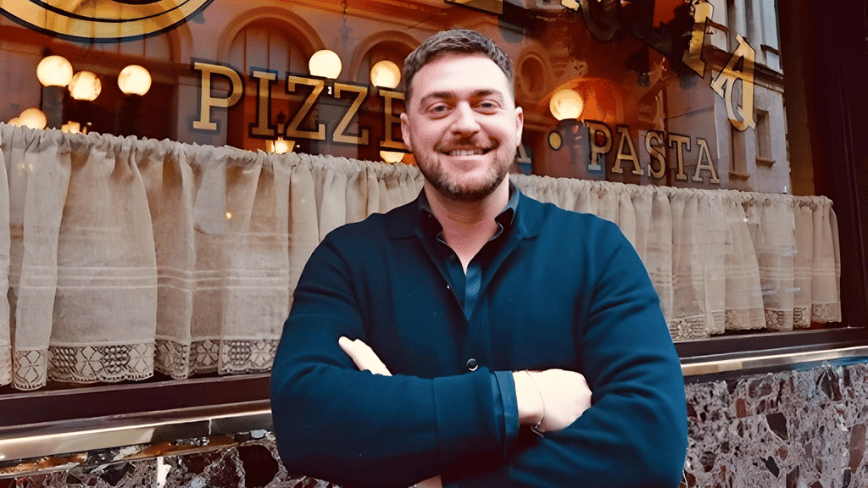
The hospitality industry has historically thrived on human interaction, yet the supporting systems have continually transformed. Arran Campolucci-Bordi, the proprietor of Casa Italia, a Liverpool establishment founded 50 years ago, reflects on this progression from handwritten reservation books to digital platforms and now to AI-enhanced operations. Each transition marks a significant shift in managing time, communication, and customer expectations.
Previously, hospitality relied solely on manual processes. Reservations were manually recorded, availability was verified by hand, and customer inquiries were addressed individually. With the advent of digital tools, many operations transitioned online, bringing about greater structure and consistency. Arran notes that the current phase introduces AI systems capable of dynamically responding to customer needs without human intervention.
In Arran's view, AI in hospitality serves primarily as an operational support tool rather than a replacement for human staff. He illustrates this with Ayra, an AI system that functions like a trained employee in certain contexts, particularly in managing information. Once equipped with details such as menus, booking systems, and policies, Ayra can engage with customers conversationally—handling tasks like checking availability, managing reservations, and addressing common queries in real-time. This allows hospitality teams to maintain focus on critical areas requiring human interaction.
This operational transformation is becoming evident across various sectors. A recent report indicates that 58% of employees claim to save time at work through AI tools, with users averaging 52 minutes saved daily, totaling nearly five hours weekly. In hospitality, where a significant amount of time is dedicated to responding to inquiries and managing bookings, these savings can lead to substantial improvements in team efficiency.
Enhancing Customer Engagement
Arran emphasizes that AI systems are designed to work in tandem with existing teams. Many roles in hospitality involve repetitive administrative tasks, detracting from direct customer engagement. By reallocating these tasks to AI interfaces, businesses can enable staff to focus more on in-person service within the restaurant. Arran states, “By shifting those tasks to an AI-driven interface, businesses can allow staff to concentrate on delivering service where it matters most.”
This redistribution of time can significantly reshape service delivery within restaurants. Arran explains that operational inefficiencies often arise from fragmented communication, especially when customers reach out for similar questions or booking requests. Each interaction may seem brief, but collectively, they demand a considerable time commitment. Ayra, capable of managing these interactions 24/7, increases the time staff can spend with customers and reduces the risk of missed opportunities.
Moreover, this perspective aligns with changing customer behaviors. Arran observes, “As digital communication has become more immediate, customer expectations for response times have also evolved.” Customers now anticipate quick and precise answers, whether they are making reservations or inquiring about menu options. Systems that provide instant responses help meet these expectations while ensuring clarity and consistency in communication.
A common misconception is that the hospitality sector is slow to adopt new technology due to its inherently human-centric nature. Arran argues that the challenges stem from the industry's tendency to inadequately vet new technologies before implementation. He points out that one of the significant barriers for restaurant owners is not necessarily a resistance to technology but rather uncertainty about practical applications. Consequently, the AI platform he developed is designed to be robust yet straightforward, requiring minimal information from businesses to train the AI agent. Once this information is in place, the system can function autonomously.
This approach reflects a broader trend in technology integration across traditional industries. Instead of necessitating fundamental operational changes, tools are being crafted to fit seamlessly into established frameworks. Arran posits that this compatibility is crucial for the enduring adoption of technology, especially in sectors where consistency is paramount.
Looking forward, Arran perceives AI as part of a continuous evolution rather than a final endpoint. The journey from manual processes to digital systems has already transformed hospitality operations, and AI represents another significant milestone in this progression. Each phase introduces new efficiencies while preserving the core objective of effectively serving customers.
“People come into a restaurant for the experience, and that will always be the case,” Arran concludes. “If technology can manage everything outside that experience, it allows the staff to focus on what they do best, providing customers with the best possible experience.”