

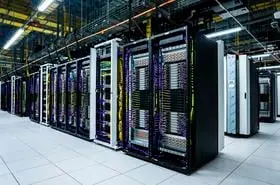
The rapid expansion of digital infrastructure has placed data centers at the heart of modern society, yet their voracious appetite for electricity presents a growing challenge to electrical grids worldwide. Traditionally, data centers have been designed as constant, unyielding loads, drawing fixed amounts of power regardless of grid conditions. However, a new paradigm is emerging, championed by industry experts such as Devin Dilley and Adam Kabulski of EPC Power. They argue that the future lies in a flexible relationship between data centers and the grid—one where data centers dynamically adjust their power consumption to support grid stability, integrate renewable energy, and reduce overall costs.
The Growing Power Demand of Data Centers
Data centers currently consume about 1-2% of global electricity, a figure expected to rise sharply as cloud computing, artificial intelligence, streaming services, and the Internet of Things continue to expand. In the United States alone, data center electricity use is projected to reach 140 billion kilowatt-hours annually by 2025, equivalent to the output of roughly 50 large power plants. This surge places immense pressure on aging grid infrastructure, which already struggles with peak demand, transmission bottlenecks, and the integration of variable renewable sources like solar and wind.
Historically, data centers were built with redundancy and reliability as top priorities, often operating multiple backup generators and uninterruptible power supplies. While this ensures uptime, it also creates a rigid load profile that is unresponsive to grid signals. Utilities must plan for the maximum draw of these facilities, leading to over-provisioning of capacity and higher costs for all ratepayers. The challenge is further compounded by the geographic concentration of data centers in regions with favorable tax incentives or low electricity prices, often far from renewable generation sources.
The Concept of Flexible Loads
Flexibility in power consumption refers to the ability to adjust electricity use in response to external signals, such as price fluctuations, grid frequency deviations, or renewable generation availability. For data centers, this can take many forms: shifting non-critical computing tasks to off-peak hours, temporarily reducing power to cooling systems or servers that are not immediately needed, or even participating in demand response programs that pay facilities to curtail usage during emergencies.
Dilley and Kabulski emphasize that flexibility is not about compromising performance or reliability. Rather, it is about intelligent orchestration of workloads and infrastructure. Modern data center operators already have sophisticated monitoring and automation tools, making it feasible to implement flexible strategies without human intervention. For instance, by using predictive analytics, a data center can forecast periods of high renewable generation and pre-cool its facilities or allocate computational resources accordingly.
Grid Services from Data Centers
When data centers act as flexible loads, they can provide valuable ancillary services to the grid. One prominent example is frequency regulation—the rapid adjustment of power consumption to maintain grid stability at 60 Hz. A data center with controllable server loads and battery storage can respond within milliseconds, far faster than traditional power plants. This capability is increasingly valuable as grids incorporate more renewables, which introduce variability and reduce inertia.
Another service is demand response, where data centers agree to reduce consumption during peak stress events, such as heatwaves or plant outages. In return, they receive payments or lower electricity tariffs. Some forward-looking utilities have even begun exploring tariff structures that reward flexible loads, offering lower rates for customers willing to be interrupted or to shift usage. Dilley and Kabulski argue that such economic incentives will drive widespread adoption of flexibility.
EPC Power's Role in Enabling Flexibility
EPC Power specializes in power conversion and energy storage solutions that are critical to enabling data center flexibility. Their technologies allow data centers to seamlessly switch between grid power, battery storage, and on-site generation, optimizing for both cost and reliability. Devin Dilley, with deep expertise in power electronics, has been at the forefront of designing systems that can manage bidirectional power flows, enabling data centers to not only consume but also inject power back into the grid when beneficial.
Adam Kabulski, focused on system architecture and control software, highlights the importance of communication protocols. For a data center to participate in grid services, it must be able to receive and act upon signals from utilities or independent system operators in real time. This requires robust cybersecurity, standardized interfaces, and hardware capable of rapid response. EPC Power's solutions are built with these requirements in mind, providing a platform that can be integrated with existing data center management systems.
Technical and Economic Barriers
Despite the clear benefits, several barriers hinder the widespread adoption of flexible data center operations. One major challenge is the fear of downtime or performance degradation. Data center operators have historically prioritized 99.999% uptime (the five nines), and any deviation from this standard is viewed as unacceptable. However, Dilley and Kabulski note that flexible strategies can be implemented without violating service level agreements by applying them only to non-critical workloads or by using redundant capacity.
Another barrier is the lack of standardized market mechanisms for demand-side flexibility. While some regions like PJM in the United States and the UK's National Grid have well-established demand response programs, many others have nascent or nonexistent structures. Data center operators need clear price signals and contractual terms to justify the investment in enabling technologies. Additionally, the payback period for equipment like advanced inverters or battery systems must be compelling enough to secure executive approval.
Regulatory uncertainty also plays a role. In some jurisdictions, utilities are hesitant to allow third-party loads to participate in grid services, preferring to maintain control over their own generation resources. Policymakers are gradually recognizing the value of distributed energy resources and flexible loads, but progress is uneven. Dilley and Kabulski advocate for a collaborative approach where data center operators, utilities, regulators, and technology providers work together to create frameworks that unlock the potential of flexibility.
Case Studies and Real-World Implementations
While the concept is still evolving, several pilot projects and commercial deployments demonstrate the feasibility of flexible data centers. For instance, in Northern Virginia, the world's largest data center market, some operators have partnered with local utilities to test demand response during extreme weather events. By pre-cooling facilities and shifting server loads, they have reduced peak consumption by up to 20% without affecting customer experience.
In Europe, data centers are increasingly participating in frequency regulation markets, aided by stringent renewable targets and supportive regulations. For example, a colocation provider in Frankfurt uses behind-the-meter batteries to smooth its power draw and sell responsive capacity to the transmission system operator. The revenue from these grid services helps offset the cost of the battery installation, achieving a return on investment in under three years.
EPC Power has been involved in these projects, providing the power conversion hardware that ensures efficient and reliable operation. Their systems are designed to operate in parallel with grid and renewable sources, offering precise control over power quality and direction. These real-world examples prove that flexibility is not just theoretical but economically viable.
Integration with Renewable Energy
One of the most compelling drivers for flexible data centers is the ability to maximize the use of renewable energy. Data centers are under increasing pressure from customers and investors to reduce their carbon footprint. Many have signed power purchase agreements (PPAs) for wind or solar, but these generators are intermittent. Without flexibility, a data center may not be able to match its consumption with renewable generation in real time, forcing it to rely on grid power from fossil fuels.
By shifting workloads to times when solar or wind is abundant, data centers can effectively increase their renewable energy utilization without additional PPAs. This concept, known as time-shifting or temporal load matching, is especially potent when combined with energy storage. For example, a data center might use batteries to absorb excess solar generation during the day and discharge it during evening peaks, all while optimizing server allocation. Dilley and Kabulski emphasize that this approach can achieve near 100% renewable energy matching without relying on offsets.
Additionally, flexible data centers can help stabilize grids with high renewable penetration. When wind or solar generation drops suddenly, flexible loads can ramp down rapidly, preventing frequency dips. Conversely, when renewables flood the grid, data centers can increase consumption to absorb surplus power, reducing curtailment. This symbiotic relationship benefits both the data center operator and the grid operator.
Technological Innovations Driving Change
Several technological advancements are making flexible data centers more achievable. The rise of software-defined infrastructure allows workloads to be migrated across servers or even geographic locations with minimal latency. Containers and microservices architectures enable granular scaling of resources. On the power side, advances in wide-bandgap semiconductors (like silicon carbide) have improved the efficiency and switching speed of inverters and converters, reducing losses during operation.
Battery energy storage systems (BESS) have also become more affordable and compact, with lithium-ion prices dropping sharply over the past decade. A data center can integrate a BESS not only for backup power but also for peak shaving and grid services. EPC Power's solutions often combine bi-directional inverters with advanced controls that seamlessly manage multiple energy sources and loads.
Artificial intelligence and machine learning play a crucial role in optimizing flexibility. Algorithms can predict future workload demands, renewable generation, and grid prices, then schedule operations accordingly. These systems learn from historical data and adapt in real time, making decisions that maximize savings while maintaining reliability. For instance, a machine learning model might identify that a certain batch processing job can be delayed by two hours without impact, allowing the data center to avoid a peak price period.
Regulatory and Market Considerations
For flexible data centers to become mainstream, supportive policies and market designs are essential. Regulators should recognize the value of demand-side flexibility and create mechanisms that allow loads to participate alongside generation. FERC Order 2222 in the United States is a step in this direction, enabling distributed energy resources to aggregate and compete in wholesale markets. However, implementation varies by region and requires utilities to update their tariffs and grid codes.
Dilley and Kabulski call for standardized communication protocols and interoperability standards to simplify integration. Open standards like OpenADR (Open Automated Demand Response) and IEEE 2030.5 provide a basis, but adoption is not yet universal. They also emphasize the importance of cybersecurity, as flexible loads connected to grid controls could become targets for attack. Blockchain or distributed ledger technologies may offer secure verification of demand response events and settlements.
On the economic side, valuation of flexibility must reflect its true benefit to the grid, including avoided generation and transmission investments. Some studies suggest that a flexible data center can reduce system costs by $100-$200 per kilowatt per year. Capturing this value through appropriate compensation mechanisms will incentivize more operators to invest in enabling technologies.
The Human Element: Culture and Expertise
Beyond technology, the shift to flexibility requires a cultural change within data center organizations. Operations teams have long been trained to avoid any deviation from steady-state power consumption. Introducing variability is counterintuitive and can be resisted. Education and professional development are needed to build confidence in flexible strategies. Devin Dilley and Adam Kabulski, through their work at EPC Power, frequently engage with data center owners and operators to demonstrate the safety and reliability of flexible operations.
They highlight that flexibility can be phased in gradually, starting with non-critical loads and then expanding as processes and control software mature. A collaborative approach, where facility managers work closely with grid operators and technology vendors, reduces risk. Over time, having flexible assets becomes a competitive advantage, as operators can lower electricity costs, earn revenue from grid services, and achieve sustainability goals.
Looking Ahead: The Flexible Data Center of 2030
As the energy transition accelerates, the role of data centers in the grid ecosystem will evolve. Dilley and Kabulski envision a future where every major data center is equipped with intelligent power management systems, onsite storage, and real-time communication with grid operators. These facilities will not only use power but actively participate in balancing supply and demand, much like virtual power plants.
Increased electrification of transportation, heating, and industry will further strain grids, making flexible loads even more valuable. Data centers, with their concentrated power consumption and advanced controls, are uniquely positioned to lead this transformation. The partnership between EPC Power and thought leaders like Devin Dilley and Adam Kabulski is helping to turn this vision into reality, one kilowatt at a time.
The relationship between data centers and the grid is being redefined. Instead of being passive consumers, data centers are becoming active partners, offering their flexibility as a grid asset. This shift requires technical innovation, regulatory support, and a willingness to embrace new operational models. The work of experts in the field underscores that the path to a sustainable, reliable, and cost-effective energy future runs through the heart of the data center.
Source: Datacenterdynamics News