

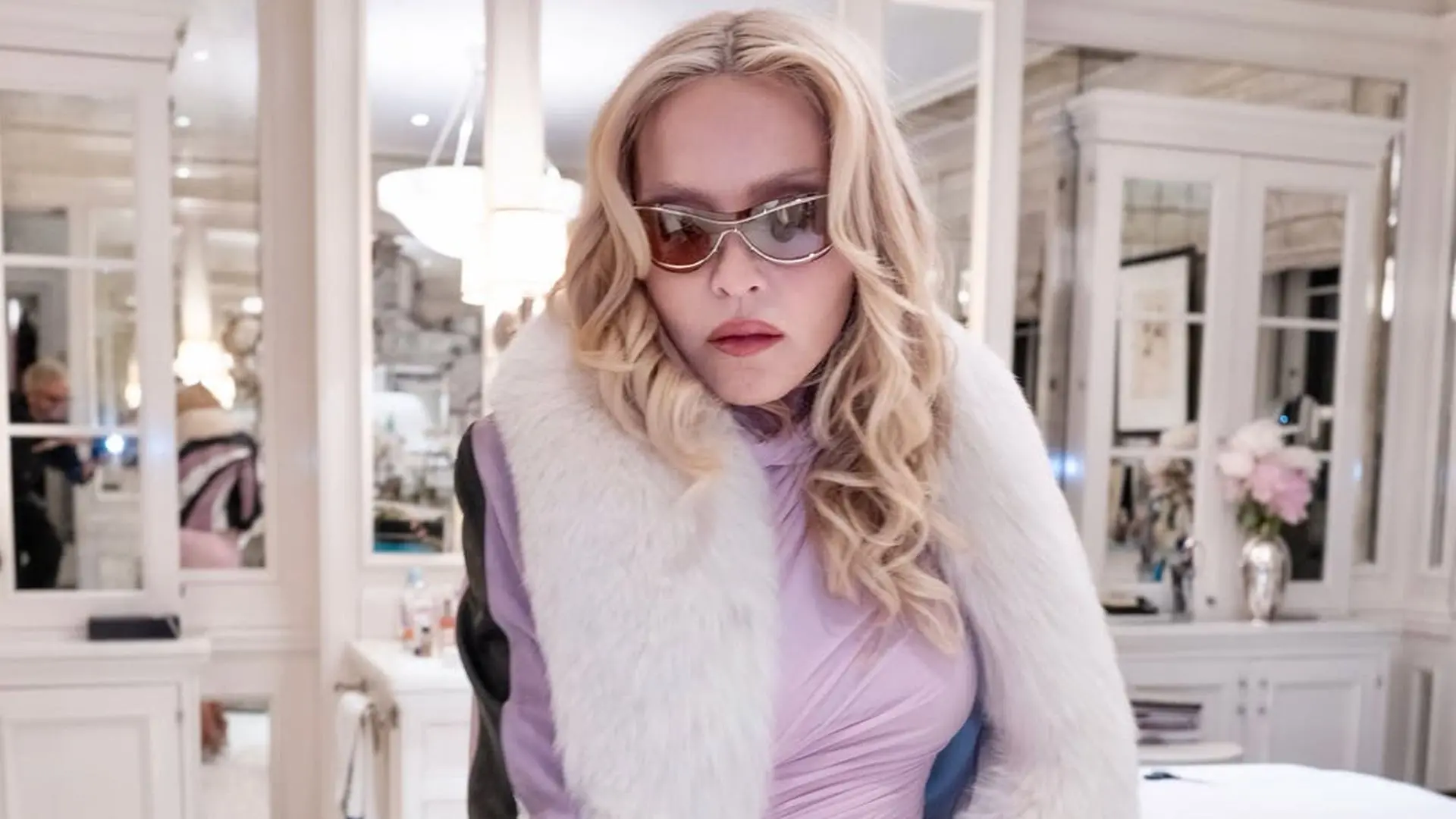
Pop music royalty and avant-garde disruptor clashed this week in a war of words that has set social media ablaze. Madonna, the undisputed Queen of Pop, posted a series of photographs on Instagram with a caption that many interpret as a direct jab at Charli XCX: "When your dancefloor feels dead, you might be playing the wrong music." The timing was no accident – just days earlier, Charli XCX had told British Vogue that "the dancefloor is dead" and that she was turning away from electronic club sounds to embrace rock music for her upcoming project.
Behind the Caption: What Was Said
The original comment that triggered Madonna's response came during an interview in which Charli XCX discussed her creative evolution. "I think the dancefloor is dead… So now we make rock music," she stated, teasing a new album that marks a significant departure from the hyper-pop and club-friendly tracks that defined her earlier work. Charli elaborated that making another dance-heavy album would have felt "very heavy, very sad" and that her new direction is about "twisting the form."
Madonna's reply, posted with images of herself in a hot pink mini dress, white bolero jacket, glittery sunglasses, and vivid pink gloves, was succinct but seismic. Within hours, the internet was divided. One fan wrote, "Oh, the jab at Charli." Another declared, "I love Charli XCX, but I think she just got buried." Others called the exchange "chaotic" and reveled in the drama.
Madonna's Dancefloor Legacy
To understand why Madonna felt compelled to speak, one must look at her legendary career. Since the 1980s, Madonna has built her empire on the dancefloor. Albums like Like a Virgin, True Blue, and especially Confessions on a Dancefloor (2005) are monuments to disco, house, and electronic music. The latter album, which sold over 10 million copies worldwide, was a seamless mix of thumping beats and introspective lyrics, cementing Madonna's status as the high priestess of club culture. For her, the dancefloor is not just a place to party – it is a sanctuary for expression, community, and liberation. She has often stated that dance music saved her life and gave her a voice.
Now, at 67, Madonna is preparing to release Confessions II, a sequel to that seminal album. The project is expected to drop in the coming weeks, and her posturing suggests she is doubling down on her dancefloor gospel. Her Instagram feed has become a platform not only for fashion and family but for cultural commentary. Whether she is celebrating Pride, advocating for LGBTQ+ rights, or defending the sanctity of the club, Madonna uses her online presence to remind fans of her enduring relevance.
Charli XCX: The Avant-Garde Rebel
Charli XCX, meanwhile, has always resisted easy categorization. Bursting onto the scene with party anthems like "I Love It" and "Boom Clap," she quickly evolved into a genre-defying artist. Her collaborations with experimental producers like SOPHIE and A. G. Cook placed her at the center of the PC Music movement, which challenged traditional pop structures. Her albums Pop 2 and Charli received critical acclaim for fusing bubblegum pop with abrasive electronic textures.
Charli's decision to declare the dancefloor dead is not a dismissal of dance music itself but a reflection of her personal artistic fatigue. "For me, it's fun to twist the form," she told Vogue. "We know that some people will be annoyed, but that's okay." Her upcoming album is described as "funny, serious, sincere, and joyful" – a mix that suggests she is still reaching for emotional depth, just through a different sonic lens. Speaking to NME, she compared the backlash to her new single "Rock Music" to early criticisms of PC Music, when some accused her of looking down on classic pop. She maintains that her new direction is sincere, not superior.
The Cultural Context: Dance Music vs. Rock Revival
The feud taps into a larger conversation about the state of pop music. For years, dance-pop and EDM have dominated charts and festivals. But recently, a rock revival has taken hold, led by artists like Olivia Rodrigo, Måneskin, and Paramore's newer material. Some critics argue that club culture has become formulaic, while others insist that the dancefloor remains a vital space for marginalized communities. Madonna's stance reinforces the latter view, while Charli's pivot signals a desire for new challenges.
It is also worth noting that both artists have previously collaborated or expressed mutual admiration. In 2015, Madonna performed with Drake at Coachella, and Charli XCX has cited Madonna as an influence. Yet creative tensions often arise when two strong-willed figures stake opposing claims. This is not Madonna's first public spat – she has engaged with artists ranging from Lady Gaga to Elton John – but it is one of the most pointed in recent memory.
Fan Reactions and Poll Results
The debate has spilled onto social media platforms beyond Instagram. On Twitter, hashtags like TeamMadonna and TeamCharli trended within hours. A poll embedded in the original article asked readers to choose sides: 20 votes for Team Madonna (the dancefloor lives) and 12 for Team Charli (time for guitars). While unscientific, the results hint at a generational split – older fans tend to side with Madonna, while younger listeners appreciate Charli's experimentation.
Among the comments, one user wrote, "Madonna doesn't need to throw shade – her legacy speaks for itself." Another countered, "Charli is evolving, and that's what Madonna used to do. Now she's become the gatekeeper." The irony is not lost on observers: Madonna built her career on rebellion and transformation, yet now finds herself defending a tradition she once helped revolutionize.
Charli XCX has not publicly responded to Madonna's post, instead focusing on promotional activities for her new album. She recently shared behind-the-scenes footage from a photoshoot and thanked fans for their support. Madonna, ever the provocateur, has continued posting glamorous shots, including a video of herself pasting posters for Confessions II on the streets of Shoreditch, London. This DIY approach echoes her early days in New York and reinforces her hands-on image.
What This Means for Pop Music in 2026
As both artists prepare to release major projects, the feud may be a blessing in disguise – generating buzz and drawing attention to their respective works. Music historians might see it as a generational clash, but at its heart, this is a debate about authenticity, evolution, and the soul of pop. Can the dancefloor remain relevant in an era of streaming and algorithm-driven playlists? Is rock music truly a fresh direction or a nostalgic retreat? There are no easy answers.
Madonna's upcoming Confessions II is expected to reunite her with producer Stuart Price and feature collaborations with contemporary dance acts. Meanwhile, Charli XCX's new album, produced in part with close collaborator A. G. Cook, promises to blend guitar-driven hooks with her trademark off-kilter production. Both releases will likely dominate headlines when they drop.
In the end, the feud may be less about personal animosity and more about two artists staking out territory. Madonna wants to remind the world that the dancefloor is her domain; Charli wants to claim ownership of a new sound. Their fans, ever passionate, will continue to debate long after the albums are out. But one thing is certain: pop music is alive and thriving when it sparks such visceral reactions. Whether you are spinning a house record or cranking a distorted guitar riff, the beat goes on.
Source: Promiflash.de News