

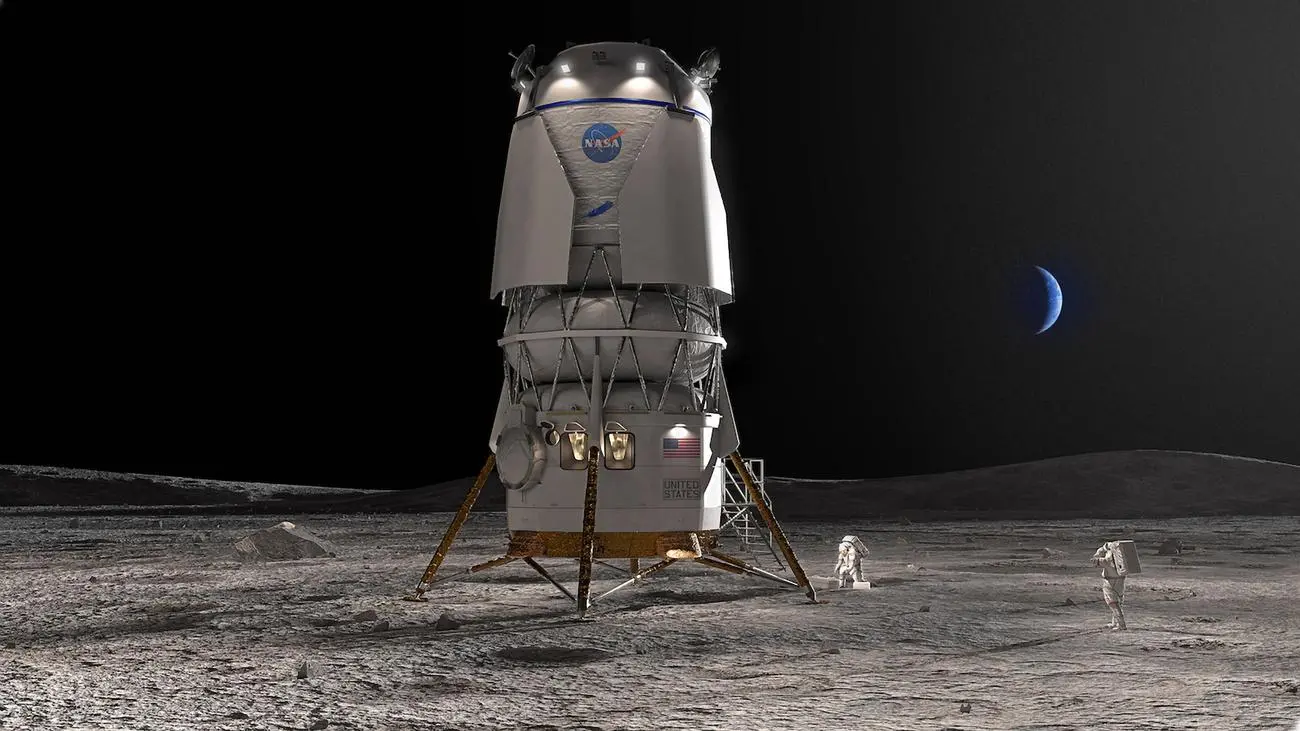
NASA has announced an ambitious new phase in lunar exploration, revealing concrete plans to establish a permanent, habitable base on the Moon. The agency's administrator, Jared Isaacman, declared that America is returning to the Moon—and this time, to stay. The announcement underscores a significant shift from short-term missions to a sustained human presence, with the goal of having the outpost operational and inhabited by the early 2030s.
The roadmap includes a series of missions in 2025 alone, featuring three uncrewed flights to deliver essential infrastructure. The European Space Agency (ESA) will participate in the third of these missions, marking an important international collaboration. These initial flights will test landing systems, deploy communication relays, and begin assembling the building blocks for a larger station that could eventually span hundreds of square kilometers.
Private Sector Involvement
A central pillar of NASA's strategy is heavy reliance on private industry. The agency has awarded contracts totaling hundreds of millions of dollars to several companies. Lunar Outpost will receive $220 million to develop and deliver lunar rovers capable of transporting cargo and supporting astronauts. Astrolab will receive $219 million for a similar rover design that emphasizes mobility and scientific payload capacity. Blue Origin, Jeff Bezos's aerospace company, has secured a $188 million contract to use its Mark-1 cargo lander to transport these rovers to the lunar surface. Additionally, Firefly Aerospace has been selected to build a specialized spacecraft that will carry drones from Earth orbit to the Moon, enabling aerial reconnaissance and surveying.
These contracts represent a deliberate effort to leverage commercial innovation and reduce costs, while also creating a competitive ecosystem. Each company brings unique technologies: Blue Origin's lander offers heavy lift capability, while Lunar Outpost is known for compact, autonomous rovers, and Astrolab focuses on human-rated vehicles. The drones from Firefly will provide high-resolution mapping of potential base locations.
Geopolitical Context
Behind the technical milestones lies a broader geopolitical competition. China has announced plans to land astronauts on the Moon by 2030, and Russia, despite economic setbacks, maintains a lunar program with similar ambitions. NASA's accelerated timeline is partly a response to this challenge, aiming to secure a strategic foothold and demonstrate leadership in space exploration. The Artemis program, named after Apollo's twin sister, has already seen a major achievement: in April 2025, the Artemis 2 mission carried astronauts farther from Earth than any humans before, marking the first crewed lunar flyby in over 50 years. That mission reestablished U.S. capacity to send people beyond low Earth orbit.
Historical Context and the Artemis Program
The last time humans walked on the Moon was during Apollo 17 in December 1972. Since then, robotic missions have provided a wealth of scientific data, but crewed exploration remained the province of low Earth orbit. The Artemis program began in earnest with the uncrewed Artemis 1 mission in late 2022, which successfully orbited the Moon and tested the Orion spacecraft. Artemis 2 followed with a crew that included the first woman and the first person of color to journey to lunar vicinity. Plans for Artemis 3, currently scheduled for the latter half of the 2020s, aim to land the first woman and the next man on the lunar south pole.
The choice of the south pole is deliberate: it offers abundant water ice in permanently shadowed craters, which could be used for drinking water, oxygen, and rocket fuel. Establishing a base there would provide a launch point for deeper space missions, including to Mars. NASA envisions the lunar station as a stepping stone, with astronauts living and working in pressurized modules connected by tunnels, supported by solar power and in-situ resource utilization.
Technical Challenges and Rover Capabilities
Building such a station requires overcoming enormous technical hurdles. The rovers developed by Lunar Outpost, Astrolab, and others must operate in extreme temperatures, from -170°C at night to 120°C in sunlight, and traverse rugged terrain with sharp rocks and loose regolith. They need to be semi-autonomous to handle communication delays, and their wheels must resist abrasive lunar dust. The Mark-1 lander from Blue Origin is designed to deliver up to 3,000 kilograms of payload to the surface, while Firefly's drone carrier will release small aerial vehicles that can fly in the thin, near-vacuum atmosphere using thrusters instead of wings.
These technologies will enable astronauts to conduct wider-ranging geological surveys, test life-support systems, and begin constructing habitats. The first habitats may be inflatable modules covered with regolith for radiation shielding. Over time, 3D printing using lunar soil could create more permanent structures. NASA's long-term vision includes a power grid, greenhouses for food production, and a reliable transportation system between Earth and the Moon.
Future Implications
The implications extend beyond exploration. A lunar base would provide a platform for radio astronomy shielded from Earth's interference, a clinical research lab for studying low-gravity effects on the human body, and a testbed for technologies critical for Mars colonization. It could also serve as a economic hub for mining helium-3, a potential fuel for future fusion reactors, and for extracting platinum group metals. International partners like ESA, Japan's JAXA, and Canada's CSA are already contributing modules and experiments.
The pace of these developments is remarkable. Within a decade, the Moon could transition from a distant destination to a place where humans live and work regularly. The contracts awarded today are laying the foundation—literally and figuratively—for that future. As Isaacman put it, the return to the Moon is not a fleeting visit but a permanent settlement. The next few years will determine whether that vision becomes a reality.
Source: DIE ZEIT News