

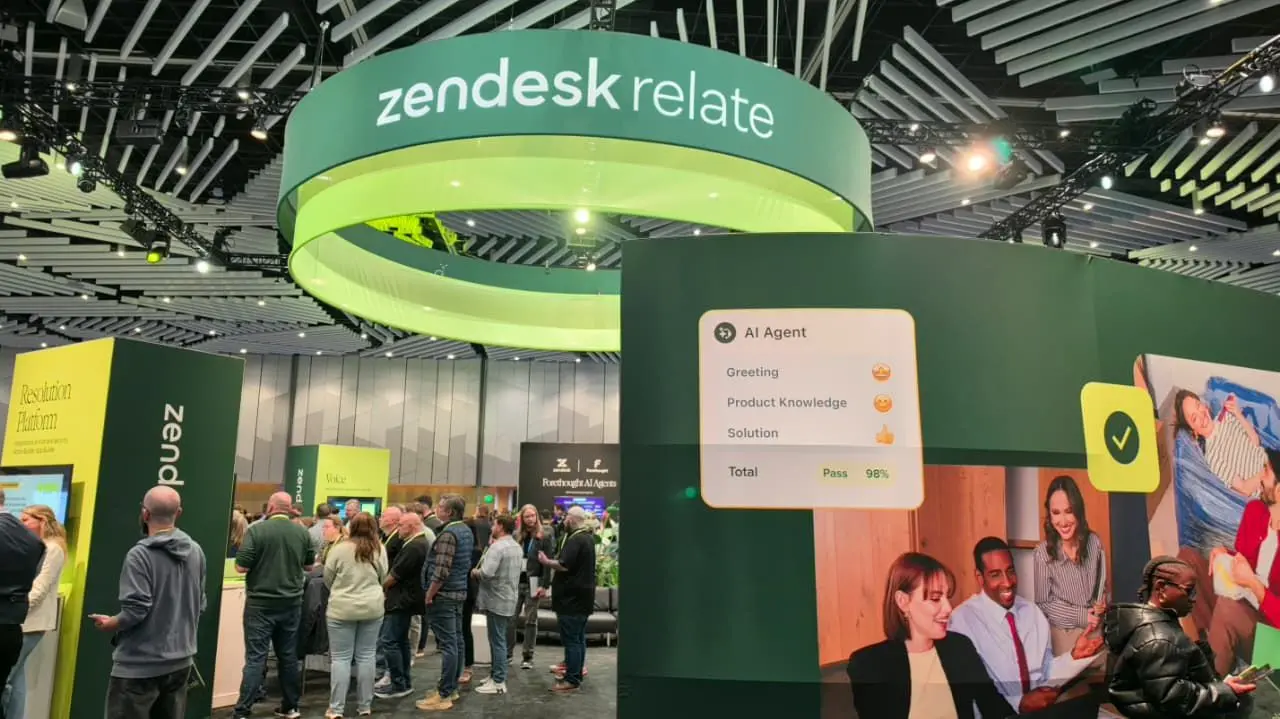
A new pricing paradigm for AI agents
Zendesk, a global leader in customer service software, has unveiled a groundbreaking pricing model for its AI-powered agents that promises to upend the traditional per-seat licensing structure. Instead of charging companies based on the number of AI agents they deploy, Zendesk will now charge based on the actual outcomes those agents deliver—specifically, for each verified resolution of a customer issue. The announcement, made at the company’s annual Showcase event, marks a significant departure from industry norms and reflects a broader shift toward value-based pricing in the enterprise software space.
“Stop thinking of agents as software... start thinking of them as a unit of labor,” said a Zendesk executive during the keynote. The statement encapsulates the company’s vision: AI agents are not just tools to be counted but workers that perform measurable work. By tying pricing to verified resolutions, Zendesk aims to create a direct link between what customers pay and the tangible business value they receive, eliminating the disconnect that often exists in subscription-based models.
How the new model works
Under the traditional model, companies would purchase licenses or subscriptions for each AI agent “seat,” regardless of how many issues those agents actually resolved. This meant that during periods of low demand, businesses were still paying for capacity they didn’t fully use. Zendesk’s new approach changes that dynamic entirely. Now, customers are billed only for verified resolutions—that is, customer inquiries that the AI agent successfully handles from start to finish, with the resolution confirmed by the customer or an automated system. Unresolved issues or those escalated to human agents do not incur charges.
Zendesk defines a “verified resolution” as an interaction where the AI agent provides a complete answer or action that the customer accepts as satisfactory. This may include answering a question, processing a refund, updating an account, or any other task that meets predefined success criteria. The company has developed an internal verification system that logs each interaction and checks it against resolution standards. The pricing is designed to be transparent, with per-resolution costs expected to be lower than the cost of hiring human agents for the same tasks, especially for high-volume, repetitive inquiries.
Impact on customer service economics
The new pricing model has the potential to fundamentally change how companies budget for customer service. Instead of fixed monthly software subscription fees, firms will now have a variable cost that scales with their actual needs. For seasonal businesses or those experiencing rapid growth, this flexibility can dramatically reduce overhead. Moreover, the model incentivizes Zendesk to continuously improve its AI agents’ success rates, since higher resolution rates directly translate into higher revenue. This alignment of incentives is rare in the software industry, where vendors often benefit from high seat counts rather than high performance.
Industry analysts have praised the move as a bold step toward outcome-based pricing in SaaS. According to a report from Gartner, by 2026, 30% of large enterprises will adopt outcome-based pricing for some of their customer service technology. Zendesk’s announcement could accelerate that trend, prompting competitors such as Salesforce, Intercom, and Freshworks to rethink their pricing strategies. However, the model also carries risks, including the complexity of defining and verifying resolutions, potential disputes over what constitutes a “verified” resolution, and the need for robust data infrastructure to track every interaction.
Background: The rise of AI agents in customer service
Customer service has been one of the earliest and most successful applications of artificial intelligence. From simple chatbots answering FAQs to sophisticated AI agents that can handle complex transactions, the technology has evolved rapidly in recent years. Zendesk has been at the forefront of this evolution, integrating AI features into its platform since 2016. The company’s AI agent, known as “Zendesk Answer Bot,” began as a basic suggestion tool and has since grown into a full-fledged conversational agent capable of handling multiple languages, sentiment analysis, and context-aware responses.
The shift toward outcome-based pricing comes as the AI agent market becomes increasingly crowded. OpenAI’s GPT models have enabled a new generation of custom AI agents, while platforms like ChatGPT and Bing Chat have made AI interactions ubiquitous. Zendesk’s move is partly a defensive strategy to differentiate its offering in a commoditizing market. By tying pricing to outcomes, Zendesk is betting that its AI agents can deliver higher resolution rates than generic models, because they are trained on historical customer service data and fine-tuned for specific business domains.
Historical context: Zendesk’s pricing evolution
Zendesk was founded in 2007 by three Danish entrepreneurs—Mikkel Svane, Alexander Aghassipour, and Morten Primdahl—initially as a simple help desk ticketing system. The company quickly gained popularity for its user-friendly interface and flexible pricing, which started at $1 per agent per day. Over the years, Zendesk grew to serve over 150,000 customers worldwide and went public in 2014. Its pricing model evolved from pure per-seat subscriptions to include tiers based on features, storage, and API calls. The introduction of AI agents in 2016 was initially offered as an add-on, priced per conversation or per monthly active user.
The new outcome-based model is a natural progression for a company that has always emphasized customer success. In 2020, Zendesk acquired Smooch.io, a conversational marketing platform, to deepen its AI capabilities. It also invested heavily in machine learning research, building a dedicated team to improve resolution accuracy. The pricing announcement is the culmination of those investments, reflecting confidence that the technology can deliver consistent, measurable results.
Competitive landscape and industry reaction
Other major players in the customer service software space have yet to formally announce similar pricing shifts. Salesforce, with its Einstein AI, continues to bundle AI features into its existing CRM subscriptions. Intercom, a strong competitor in the mid-market, recently introduced “Fin,” an AI agent that is priced per resolution in a beta program—but without the same level of verification and transparency as Zendesk. Freshworks, another key player, charges per agent seat but includes some AI capabilities without additional fees. Industry watchers believe that if Zendesk’s model proves successful, it could force all vendors to align pricing more closely with value.
Customer feedback has been generally positive, particularly among small and medium-sized businesses that have been priced out of traditional AI features. “This is exactly what we need,” said one SMB customer quoted in a Zendesk press release. “We can’t afford to pay for 50 AI agents just in case we get a surge in tickets. Now we only pay for what works.” However, some large enterprises have expressed concerns about the predictability of costs. With variable pricing, budgeting becomes more challenging, especially for teams that need to forecast monthly expenses. Zendesk has responded by offering caps and pre-purchase discount options for high-volume customers.
Technical underpinnings and verification challenges
Implementing outcome-based pricing requires a sophisticated system to track and verify resolutions. Zendesk has built a “Resolution Engine” that logs every AI agent interaction, classifies the outcome (resolved or not), and assigns a confidence score. The engine uses natural language processing to analyze customer feedback at the end of each conversation, as well as behavioral signals such as whether the customer submits another related query within a short period. If the customer returns with the same issue, the resolution is automatically flagged as incomplete and not counted for billing.
This verification process is not foolproof. There are edge cases where a customer might be satisfied but still submits a follow-up due to a misunderstanding, or where the AI agent partially resolves an issue but the customer considers it fully resolved. Zendesk says it continuously trains its models to reduce false positives and false negatives, and that customers can dispute billing through a dedicated dashboard. The company has also committed to third-party audits of its resolution tracking system to ensure fairness.
Broader implications for the AI industry
Zendesk’s move may herald a wider shift toward outcome-based pricing across the AI industry. Currently, most AI services are priced per API call, per token, or per user—all input-based metrics that do not directly correlate with the value produced. For example, a company using OpenAI’s GPT-4 to generate code pays the same per token whether the code compiles successfully or not. Similarly, cloud AI providers charge for compute time regardless of the quality of the output. Outcome-based pricing could change that, forcing AI vendors to take more responsibility for the results their models produce.
This model also aligns with the growing emphasis on responsible AI and accountability. When vendors are paid only for successful outcomes, they have a financial incentive to reduce bias, improve accuracy, and handle edge cases gracefully. It could also spur innovation in areas such as automated quality assurance and verification systems, as companies seek to reduce disputes. Zendesk’s approach is particularly suitable for customer service, where outcomes are relatively well-defined and can be validated through customer satisfaction surveys
Source: TechRadar News