

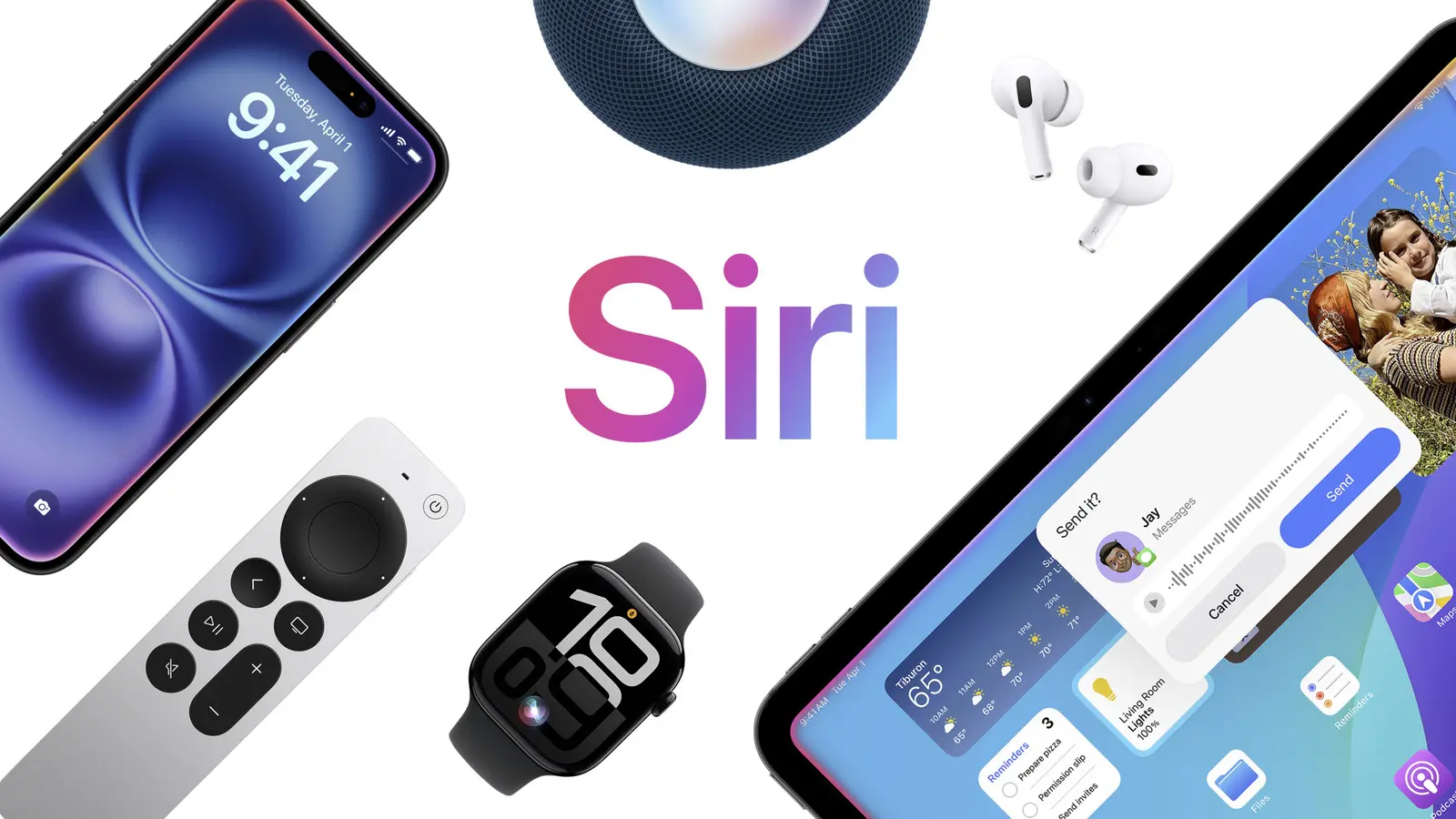
Apple has agreed to pay $250 million to settle a class action lawsuit that alleges the company misled iPhone buyers in the United States about the launch of its long-promised AI-powered Siri assistant. The lawsuit, first reported by The Financial Times, stems from Apple's failure to deliver the enhanced Siri features it announced alongside its broader Apple Intelligence initiative at WWDC 2024. The settlement, which requires approval by a judge, would provide compensation to purchasers of the iPhone 16 lineup and iPhone 15 Pro models who expected to receive the upgraded virtual assistant.
At WWDC 2024, Apple showcased a dramatically reimagined Siri that could understand context, take actions within apps, and leverage on-device intelligence. The company marketed these capabilities as a centerpiece of Apple Intelligence, its foray into generative AI. However, nearly two years later, Apple has yet to ship this version of Siri, leaving customers who bought devices touted as Apple Intelligence-ready without the promised functionality. The class action alleges that Apple knowingly advertised features it could not deliver in a timely manner, thereby violating consumer protection laws.
The Settlement Details
Under the proposed settlement, Apple will pay $250 million to a class of US residents who purchased an iPhone 16, iPhone 16 Plus, iPhone 16 Pro, iPhone 16 Pro Max, or iPhone 15 Pro between September 2024 and the date of the settlement approval. The exact distribution per claimant has not been disclosed, but legal experts estimate individual payouts could range from $25 to $200 depending on the number of claims filed. Notably, Apple does not admit any wrongdoing or liability as part of the agreement. The company maintains that the delay was due to unforeseen technical challenges and that it always intended to deliver the features.
Apple's decision to settle avoids a potentially lengthy and costly court battle. Class action lawsuits over delayed or misleading product features have become more common in the tech industry. For example, Samsung faced similar claims over delayed software updates, and Tesla has been sued over Autopilot promises. By settling, Apple can put this issue behind it while continuing to develop its AI capabilities.
The History of Siri and Apple Intelligence
Siri, originally launched as a standalone app in 2010 and acquired by Apple in 2011, has long been seen as lagging behind competitors like Amazon's Alexa and Google Assistant. Over the years, Apple made incremental improvements, but the 2024 announcement promised a fundamental shift. The new Siri would be powered by large language models (LLMs) and could perform tasks like summarizing messages, generating custom images, and even mimicking the user's writing style. More critically, it would gain on-screen awareness, allowing it to see what was on the device and take actions such as booking a ride or ordering food without needing to open the app.
Apple Intelligence was introduced as a suite of features across iOS, iPadOS, and macOS. Initially, Apple rolled out AI writing tools, image generation (Image Playground), and ChatGPT integration throughout 2024 and 2025. However, the Siri upgrades were repeatedly pushed back. Apple did not publicly acknowledge the delay until March 2025, over five months after the iPhone 16 launched. In a statement, the company admitted that the new Siri would require more development time and that it would not meet the original timeline.
Following the delay, Apple pulled television and online advertisements that featured the promised Siri functionality. The ads, which had run heavily during the 2024 holiday shopping season, showed users asking Siri to interact with apps and get contextual information. Critics accused Apple of deceptive marketing, a claim the lawsuit echoed.
Why the Delay?
Industry insiders attribute the delay to several factors. First, Apple's approach to on-device AI processing required balancing performance with privacy. The company uses its own silicon, including the A18 and M4 chips, to run AI models locally. Achieving a Siri that can understand user context and app actions in real time proved technically difficult. Second, Apple's initial reliance solely on its own models may have been overly ambitious. Competitors like Google and OpenAI had a head start in LLM development.
In early 2025, Apple entered a partnership with Google to use the company's Gemini AI models to power some of the new Siri features. This collaboration marked a shift for Apple, which usually prefers in-house solutions. The partnership reportedly allowed Apple to accelerate development, though it also raised questions about data privacy, given Google's business model.
Impact on Apple's Reputation and Market
The delay has been a rare stain on Apple's track record of product launches. The company is known for polished, on-time releases, and the Siri misstep has drawn criticism from analysts and consumers alike. Apple's stock saw modest fluctuations during the announcement of the delay, but the settlement adds a financial cost. More importantly, the incident may erode trust in Apple's AI ambitions. The company is now racing to include the new Siri in iOS 27, expected to launch in late 2026. Apple has also been reportedly working on a standalone home robot device that would rely heavily on Siri, making the assistant's capabilities critical for future products.
In the competitive landscape, Google Assistant and Amazon Alexa have also evolved, though both companies face their own challenges. Google has integrated its Bard/Gemini AI into Assistant, while Amazon is revamping Alexa with a generative AI update. Apple's delay gives rivals time to strengthen their ecosystems.
Lessons Learned and Future Outlook
The lawsuit and settlement highlight the risks of making bold AI promises without ensuring deployment timelines. Apple's marketing for the iPhone 16 explicitly centered on Apple Intelligence, with the tagline "Ready for the future." Consumers who spent $1,000 or more on a phone expecting those features felt particularly slighted. The settlement may encourage other tech companies to be more cautious in advertising upcoming AI capabilities.
Moving forward, Apple plans to release the new Siri as part of a major iOS update. The company has also hinted at a more significant AI strategy involving on-device and cloud-based models. The partnership with Google is expected to be temporary as Apple develops its own foundational models. Meanwhile, iOS 27 is rumored to include an AI-powered Siri that can finally perform the tasks originally advertised.
For Apple, the $250 million settlement is a relatively small price for a company with over $100 billion in annual profit. But the reputational damage may take longer to repair. Consumers are increasingly aware of the gap between AI promises and reality, and Apple will need to deliver on Siri to regain full confidence.
Source: Engadget News