

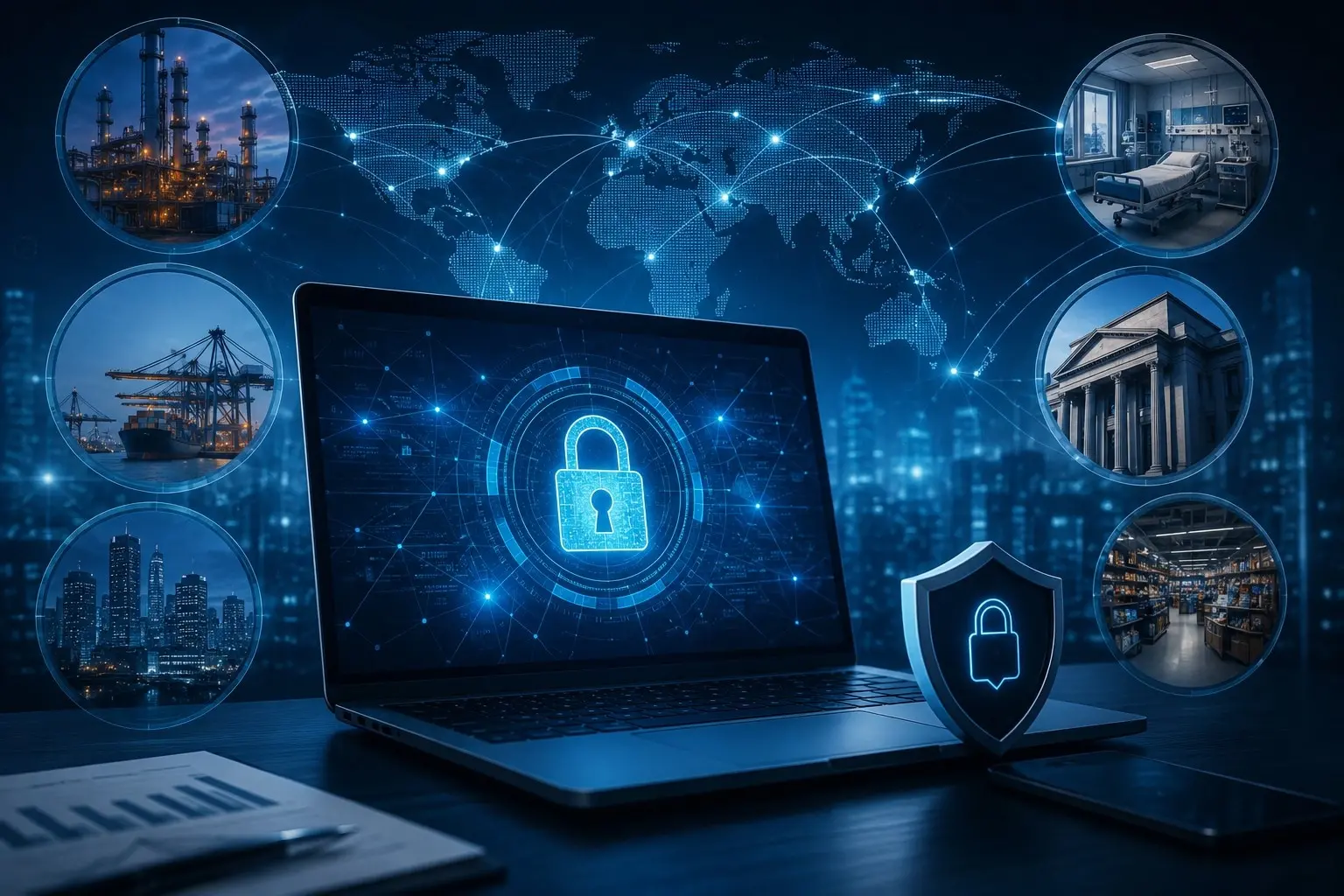
Cybersecurity is no longer just an IT issue sitting in the corner of a company’s office. Research findings about cybersecurity across global industries show that attacks are becoming more targeted, more expensive, and a lot more personal. From hospitals and banks to factories and retail stores, businesses are discovering that one weak link can disrupt entire operations within hours.
Here’s the thing: most organizations still underestimate how connected modern threats really are. A ransomware attack on a shipping company can delay retail inventory. A healthcare breach can expose millions of patient records. Even small businesses are now targets because attackers know many firms still rely on outdated protection systems.
Research findings about cybersecurity across global industries reveal that ransomware, phishing, AI-powered attacks, and supply chain vulnerabilities are driving major financial and operational risks in 2026. Industries investing in employee training, cloud security, and zero-trust frameworks are recovering faster and reducing breach costs more effectively than organizations relying only on traditional antivirus systems.
What Is Cybersecurity Across Global Industries?
Cybersecurity across global industries refers to the strategies, technologies, and policies businesses use to protect digital systems, customer data, operational networks, and cloud infrastructure from cyber threats.
Different sectors face different risks. Financial institutions battle fraud and account takeovers. Healthcare providers deal with patient-data theft. Manufacturing firms face industrial sabotage and ransomware attacks targeting production lines.
Definition Box
Cybersecurity: The practice of protecting computers, networks, software, and sensitive data from unauthorized access, attacks, or digital damage.
What most people overlook is that cybersecurity isn’t just about stopping hackers anymore. It’s also about business continuity, customer trust, regulatory compliance, and reputation management.
In my experience, companies that treat cybersecurity as a business strategy rather than a technical expense tend to recover faster after incidents.
Why Cybersecurity Matters in 2026
Cybersecurity has become one of the biggest operational concerns for global industries in 2026 because businesses are more digitally dependent than ever before.
Cloud computing, AI tools, remote work, and connected devices have expanded attack surfaces dramatically. One employee clicking the wrong email can now affect thousands of customers within minutes.
Research from multiple industry studies shows several growing trends:
AI-Powered Cyberattacks Are Increasing
Attackers are now using artificial intelligence to create realistic phishing emails, automate password cracking, and mimic human behavior during fraud attempts.
A few years ago, poorly written scam emails were easy to spot. Not anymore. Some phishing campaigns now look cleaner than official corporate communication.
That’s honestly a little unsettling.
Healthcare Faces Severe Data Risks
Healthcare organizations remain one of the most vulnerable sectors globally because hospitals store valuable personal and financial information while often running older infrastructure.
A realistic example would be a regional hospital network losing access to patient files during a ransomware attack. Operations slow down instantly. Emergency care becomes harder. Insurance systems stop responding. The damage spreads beyond just technology.
Manufacturing Is Becoming a Prime Target
Factories using industrial automation systems are increasingly vulnerable to cyber disruption. If attackers disable production systems, businesses can lose millions in delayed manufacturing and logistics.
What’s interesting is that some attackers don’t even steal data anymore. They simply interrupt operations and demand payment.
That shift changes everything.
Small Businesses Are Under Pressure
Many small companies assume cybercriminals only target large corporations. Research says otherwise.
Smaller businesses are often attacked because they lack advanced protection systems and dedicated security teams. A local accounting firm or online retailer might actually be easier to breach than a multinational bank.
What Are the Biggest Cybersecurity Threats Across Industries?
Several threats consistently appear in global cybersecurity research findings.
Ransomware
Ransomware attacks lock systems or data until a payment is made. These attacks have evolved into highly organized criminal operations.
Some groups even offer “customer support” during ransom negotiations. Strange world, honestly.
Phishing and Social Engineering
Employees remain one of the weakest security points in most organizations. Cybercriminals manipulate people emotionally rather than breaking technical defenses directly.
Fear, urgency, curiosity, and trust still work surprisingly well.
Supply Chain Attacks
Businesses increasingly depend on third-party software vendors and cloud providers. Attackers exploit these relationships to infiltrate multiple organizations through one weak partner.
This is probably the most underestimated risk right now.
Insider Threats
Not every threat comes from outside. Employees, contractors, or former staff members can intentionally or accidentally expose sensitive information.
Sometimes it’s malicious. Sometimes it’s simply carelessness.
How to Improve Cybersecurity Across Industries — Step by Step
Businesses looking to strengthen cybersecurity usually need a layered approach rather than one single solution.
1. Conduct a Full Security Audit
Organizations should identify vulnerable systems, outdated software, weak passwords, and exposed endpoints.
You can’t protect what you haven’t mapped properly.
A proper audit often reveals forgotten systems still connected to core networks.
2. Train Employees Regularly
Most cyberattacks still begin with human error.
Staff should learn how to identify phishing emails, suspicious links, fake login pages, and unusual requests.
Short monthly training sessions usually work better than long annual seminars nobody remembers.
3. Adopt Zero-Trust Security Models
Zero-trust security assumes no user or device should automatically be trusted, even inside the network.
Access permissions stay limited unless verified continuously.
Research findings suggest companies adopting zero-trust frameworks reduce breach exposure significantly.
4. Strengthen Cloud Security
As businesses move to cloud platforms, cloud misconfigurations have become a common weakness.
Security teams should use encryption, multi-factor authentication, and strict access controls.
One misconfigured storage bucket can expose thousands of customer records publicly.
5. Build an Incident Response Plan
Many companies prepare for prevention but ignore recovery planning.
That’s a mistake.
A good incident response plan outlines how teams isolate attacks, communicate internally, restore operations, and notify customers if necessary.
6. Continuously Monitor Systems
Cybersecurity isn’t a “set it and forget it” situation.
Threat monitoring tools help detect unusual behavior early before attacks spread widely.
Real-time detection often makes the difference between a minor disruption and a major crisis.
Common Mistake Businesses Still Make
A surprisingly common misconception is believing expensive software alone solves cybersecurity problems.
It doesn’t.
I’ve seen companies spend heavily on security platforms while employees reuse passwords across multiple systems or ignore software updates for months.
Technology matters, sure. But culture matters just as much.
Sometimes more.
Which Industries Face the Highest Cybersecurity Risks?
Different sectors experience different attack patterns based on the type of data they manage.
Financial Services
Banks and payment companies remain major targets because financial information has immediate monetary value.
Fraud prevention systems are becoming more AI-driven, but attackers are evolving quickly too.
Healthcare
Healthcare organizations often operate under intense pressure with limited downtime tolerance, making them attractive ransomware targets.
Patient records also sell for high prices on illegal markets.
Retail and E-Commerce
Retailers collect payment information, customer identities, and shopping behavior data.
Holiday seasons often see spikes in cyberattacks because transaction volumes increase dramatically.
Government and Public Sector
Government agencies store sensitive national infrastructure and citizen information.
State-sponsored attacks remain a serious concern globally.
Manufacturing and Logistics
Connected factories and global supply chains create operational vulnerabilities attackers can exploit.
A production shutdown might affect international distribution within days.
Expert Tips and What Actually Works
One thing I’ve learned from studying cybersecurity trends is that businesses often overcomplicate protection strategies.
The organizations performing best usually focus on fundamentals consistently:
Fast software updates
Employee awareness
Multi-factor authentication
Backup systems
Network segmentation
That’s not flashy advice, but it works.
Here’s another point most guides miss: cybersecurity spending alone doesn’t guarantee better security outcomes. Some companies throw money at tools without improving communication between departments.
Security teams and leadership need alignment.
Otherwise, even good systems become disconnected.
Expert Tip
Organizations should test their cybersecurity defenses using simulated phishing attacks and penetration testing at least twice a year. Controlled testing exposes weak points before attackers discover them first.
How Artificial Intelligence Is Reshaping Cybersecurity
Artificial intelligence is changing cybersecurity on both sides.
Businesses use AI to detect suspicious behavior, automate threat analysis, and improve response times. Attackers use AI to create more convincing scams and bypass traditional defenses.
That balance is becoming harder to manage.
A counterintuitive point here is that automation alone may actually increase risk if companies rely on it blindly. Human oversight still matters because AI systems can misinterpret behavior or miss context.
You probably don’t want an automated system shutting down an entire business operation because of one false alert.
The Financial Impact of Cybersecurity Failures
Cyberattacks now carry financial consequences beyond direct theft.
Companies face:
Operational downtime
Legal penalties
Customer loss
Reputation damage
Regulatory investigations
For global enterprises, recovery costs can reach millions of dollars quickly.
Smaller businesses sometimes struggle even more because they lack financial buffers after a major incident.
A small online retailer losing customer trust for even two weeks could experience long-term revenue damage.
That part rarely gets enough attention.
How Governments and Regulations Are Influencing Cybersecurity
Governments worldwide are introducing stricter cybersecurity regulations to protect consumers and critical infrastructure.
Businesses increasingly need compliance measures involving:
Data protection
Breach reporting
Encryption standards
Vendor risk management
Consumer privacy safeguards
Regulatory pressure is pushing organizations to take cybersecurity more seriously, especially in finance, healthcare, and telecommunications.
In most cases, compliance alone won’t stop attacks. But it does force businesses to improve baseline security practices.
People Most Asked About Research Findings About Cybersecurity Across Global Industries
What is the biggest cybersecurity threat in 2026?
Ransomware remains one of the largest threats globally, especially when combined with AI-driven phishing attacks and supply chain vulnerabilities. Organizations with outdated systems are particularly vulnerable.
Why are small businesses targeted by cybercriminals?
Small businesses often lack dedicated security teams and advanced defenses. Attackers see them as easier entry points with valuable financial and customer data.
How does AI affect cybersecurity?
AI helps businesses detect threats faster and automate monitoring, but attackers also use AI to create sophisticated scams and malware campaigns. It’s becoming an arms race.
Which industry suffers the most cyberattacks?
Healthcare, finance, and manufacturing consistently rank among the most targeted sectors due to sensitive data and operational dependency on digital systems.
Can employee training really reduce cyberattacks?
Yes. Research repeatedly shows that employee awareness programs reduce phishing success rates and improve early threat reporting significantly.
What is zero-trust security?
Zero-trust security requires continuous verification of users and devices instead of automatically trusting internal network access. It reduces lateral movement during breaches.
How often should companies update cybersecurity systems?
Security updates should happen continuously. Critical patches usually need immediate deployment because attackers often exploit known vulnerabilities quickly.
Cybersecurity research findings across global industries reveal a simple reality: digital threats are no longer isolated technical problems. They directly affect revenue, operations, customer trust, and long-term business survival. Companies investing in proactive security strategies, employee awareness, and adaptive threat monitoring are far more prepared for the risks shaping 2026 and beyond.
Businesses, startups, and agencies looking to improve brand visibility, SEO ranking, and organic traffic can benefit from high authority backlinks and instant publishing opportunities through press release distribution services and trusted digital marketing services. These platforms help strengthen media coverage, online authority, and search performance for growing brands in competitive markets.